Sunday, 18 April 2021

IS IT WORTH?


I find it disturbing! 

It has been required to cut down secular-old trees in order to reconstruct Notre Dame?

Why not considering other materials? 
Nowadays with all the knowledge and technology that we have a disposal, maybe, we could have considered a different approach?

Just wondering...


Thursday, 1 April 2021

Spring 2021


Happy Spring Everyone!!

...with the hope that from now on, we'll have the freedom to enjoy nature without limitations!!


Monday, 15 March 2021

HUGE EFFORT TO SAVE A SECULAR IN BATTERSEA - LONDON

How long should we fight for our right to have in our neighborhoods these precious trees?


It's is a battle that has been going on for weeks between developers and naturalists until Extinction Rebellion activists took action and climbed into the tree. Now the situation upscaled and even Dame Judi Dench stepped in and tried to protect this 100 years old tree.


It all started with new development plans in Battersea, south London. Despite the fact that secular trees are protected by local regulations, they seem not to be when regeneration of the city is planned out. Luckily, local residents rise their voices when they saw what was about to happen, they actively involved local charities and activists. All of them worked very hard in order to stop this outrageous act.


Now it seems that developers have agreed about divert the cable that raised this problem.


 Full information can be found at: https://londonnewsonline.co.uk/dame-judy-dench-backs-battersea-tree-protestors/


Tuesday, 2 March 2021

Wednesday, 17 February 2021

NO LIMITS TO HUMAN IGNORANCE

 During these times of lockdowns, everyone has been taking advantages of the open spaces and walked and run in nature much more than we were used to doing the previous years. 


We have started to appreciate what surrounds us until we find this disgraceful dum that deface our beautiful landscapes.

The shame of the human race!

Outrageous and disgusting!


Monday, 1 February 2021

GREEN SPACE, MENTAL WELLBEING AND SUSTAINABLE COMMUNITIES

Hello All, 
hope everyone is coping well under the current circumstances.
I'd love to draw at your attention the below post which refers to the link between green space, mental health and sustainable communities.
Do you find it interesting?
Please let me know your thoughts!!

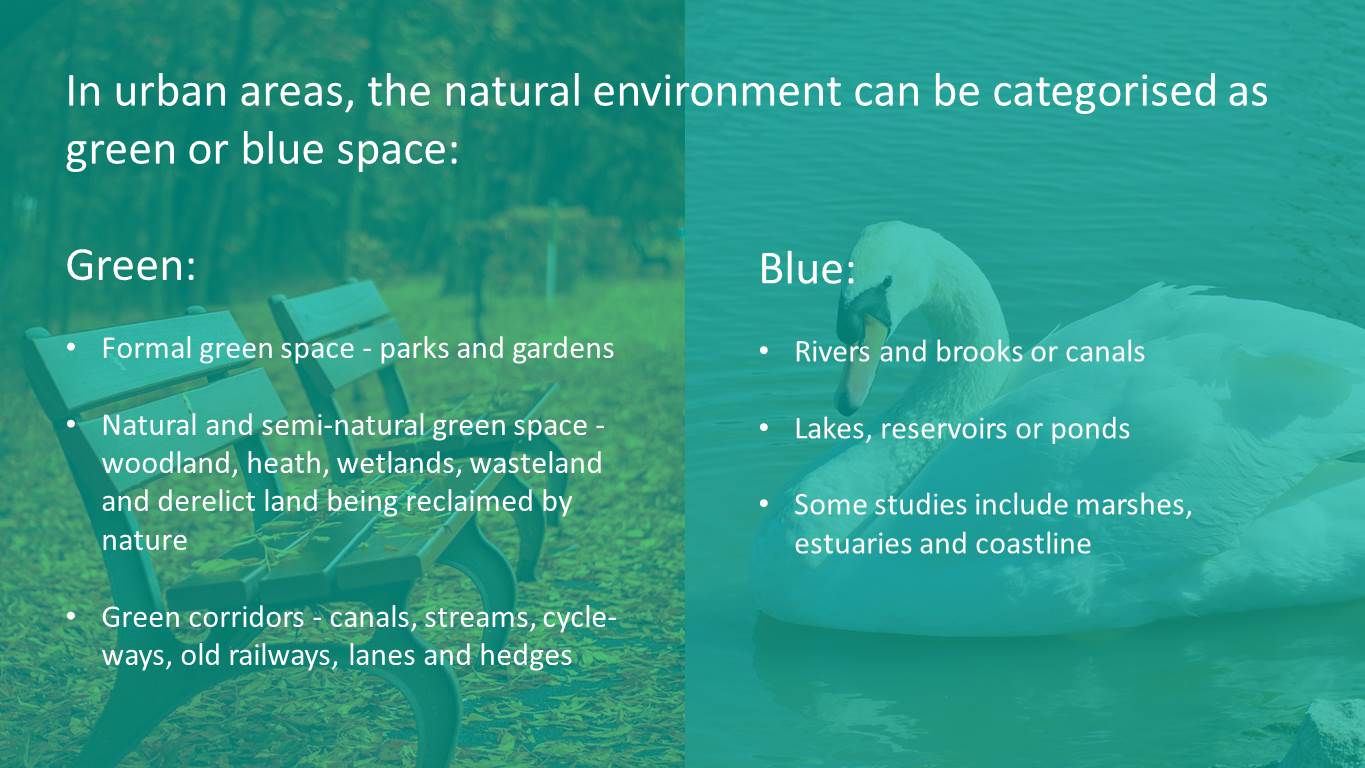
green-spaces"We’ve known for some time that good quality natural landscape in urban areas can affect how people feel. It reduces stress and sadness, lifts the mood and makes us feel better. The benefits of these green and blues space, and the mechanisms by which they work, are varied. are the physical benefits from green infrastructure, for example improved air quality, less noise pollution and reduced risks from flooding or heat-waves. There are also benefits to active users of these spaces, whether that’s physical recreation or through children interacting with nature. The impacts on mental wellbeing, social networks and sustainable communities probably work through a variety of mechanisms and it’s in these areas that the strongest evidence is emerging that urban green space can improve the public’s health. We know people who live in the areas within our cities and towns that have more green or blue space have better mental health. This has been summarised in the recent evidence submitted by Public health England to the Inquiry into Public Parks being undertaken by the Select Committee on Communities and Local Government. The Landscape Institute have also published a position statement on ‘Public Health and Landscape; creating healthy places’. This states that “healthy places make people feel comfortable and at ease, increasing social interaction and reducing antisocial behaviour, isolation and stress”. It also says “healthy places are restorative, uplifting, and healing for both physical and mental health conditions”. The Landscape Institute offers many examples of the important role that the natural environment can play in supporting principles of good design including examples of community gardens, landscape design reconnecting communities with green spaces, and the use of green space to treat mental illness and break drug dependency. More recently, we have seen renewed interest in how the natural environment can be used effectively to treat some mental health problems and assist the care and management of dementia. forthcoming conference on mental health and dementia, supported by Natural England and PHE, will look at this evidence and examples of innovative practice in using the natural environment as a component of therapeutic interventions. Examples include group activities outdoors, structured walks, horticulture and green gyms. This potential therapeutic benefit for mental illness and dementia should not come as a surprise as there is also evidence that acute hospital patients feel better and are discharged sooner when they are able to see greenery outside their window or enjoy a hospital garden. And the added bonus for public health is that retaining and developing the natural environment in our urban areas also helps us to combat climate change. This is partly because trees and shrubs help to capture CO2 and other pollutants such as particulates. It’s also because urban green and blue space can reduce the ‘Heat Island Effect’ of construction materials (especially concrete and asphalt). And green and blue spaces help absorb water and capture run off from heavy storms both through the water absorbent effects of roots and soil and because sustainable urban drainage schemes act as natural retaining ponds. So there is a wealth of evidence of how the public’s health can be improved by increasing access to green and blue space and improving the quality of our natural environment. However it’s also an area where we have much to learn and we look forward to working with partners to take this agenda forward.  This blog is one of a series being produced in the run up to the conference; Transforming Mental Health and Dementia Provision with the Natural Environment."

Friday, 15 January 2021

TREE-PRUNING CREW FROM THE LATE 1800s


Do you like this picture?

Image represent how tree-pruning was made in the late 1800s. 

Lots have changed in the last century!