Showing posts with label reforestation. Show all posts

Thursday, 6 September 2018

KENYAN INNOVATION TAKES PLASTIC BAGS OUT OF FORESTRY


Hello All,

please find here below an article I recently found in a BBC link which was talking about plastic pollution and reforestation.
Kenya already banned the use of plastic bags in 2017, what are we waiting for?

Great highlights and new points of view form Kenya, enjoy the reading!!


"KENYAN INNOVATION TAKES PLASTIC BAGS OUT OF FORESTRY

Plastic bags are known for their environmental impact. They slowly release toxic chemicals once in the soil, for instance, and find their way into the guts of animals that often choke and die as a result.

Kenya banned the use of plastic bags in 2017. And thanks to a 43-year old Kenyan, Teddy Kinyanjui, an innovative afforestation and reforestation method for developing seedlings without using plastic bags is in place.


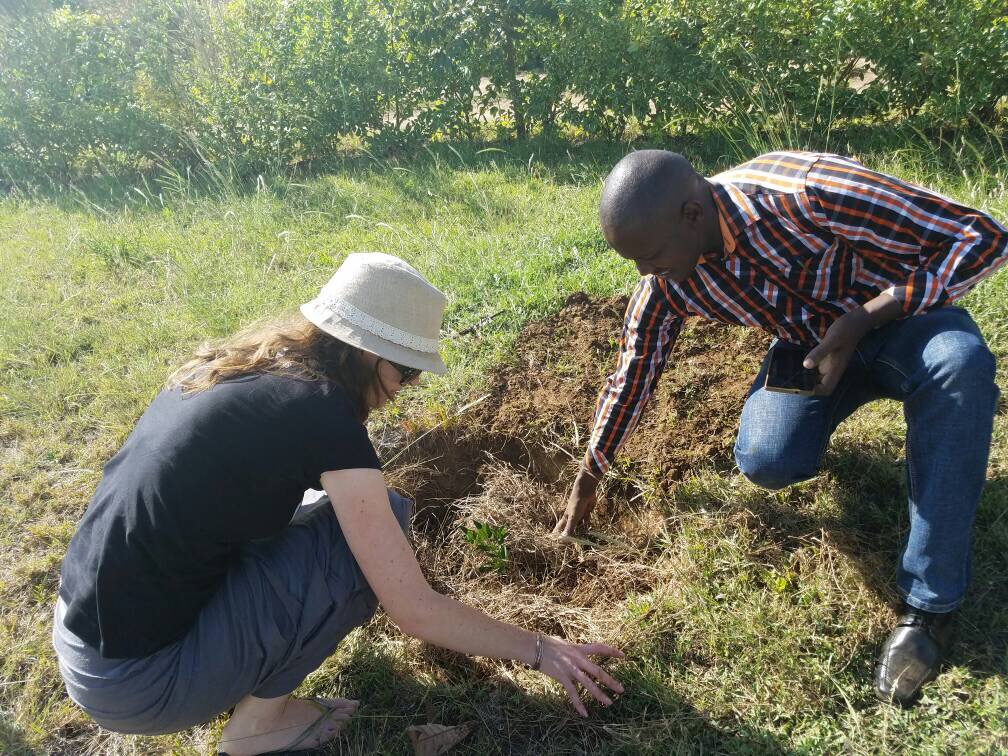
A resident of Nairobi and founder of Cookswell Jikos Limited, Kinyanjui has invented small, portable seed balls to grow and easily disperse seedlings. He is working in partnership with Kenya Forestry Research Institute (KEFRI), which certifies seeds.This photo gallery shows Kinyanjui’s ingenuity in using the seed balls instead of the usual plastic bags.

When tree seedlings are grown in plastic bags in a nursery, he explains, the roots get squeezed and this limits their ability to grow fast. The seed ball method enables roots to adapt easily, with less disturbance.
Kinyanjui says he has engineered a method of coating each seed with charcoal dust, and corn or cassava starch, to bind each ball so the seeds are protected from prey, pests and diseases.


He says he has the capacity to make one tonne of the seed balls per day. So far, since the project’s initiation in 2016, about one million seeds of different species of certified indigenous trees have been dispersed throughout Kenya through partnerships with locals and with a germination rate of 60 per cent.
“People use charcoal every day, necessitating for more trees. Climate change has also caused community conflicts, especially among pastoralists in Northern Kenya who fight over pasture for their animals,” says Kinyajui. “Good environmental management is, therefore, crucial for peace among these communities.”

He hopes to partner with like-minded organisations and youth who herd livestock with slings to disperse more seeds in arid lands.

“We would [also] like people to see the value of this simple technology
 as a contributing factor in combating and adapting to effects of climate change, as this is the cheapest way to encourage tree planting, especially in arid and semi-arid areas,” adds Kinyanjui."


Full article can be found:
https://www.scidev.net/global/environment/multimedia/kenyan-innovation-takes-plastic-bags-out-of-forestry.html

Tuesday, 21 August 2018

HOW TO GREEN THE WORLD'S DESERTS AND REVERSE CLIMATE CHANGE | Allan Savory


https://www.youtube.com/watch?v=vpTHi7O66pI


This video is from a TED talk of the 2013 and it perfectly explains how we can fight the deserts expansion in our beloved planet Earth. 

Absolutely great!! 💗

Have a look and tell me what you think!!


Thank you Allan Savory!!


Tuesday, 19 June 2018

REGREENING THE PLANET


Hello all,


please have a look at this documentary, it is amazing!!

Now I feel like buying a piece of land and working on it, I found this video very inspiring and motivating!!

It explains how China, Egypt, Spain and India have fight and are fighting the desert expansion and how it reflects on the environment and community economy, super interesting, I loved it!!

Let me know what you think!


https://www.youtube.com/watch?v=OC_Y1ZTZXQ4

Monday, 23 April 2018

G ADVENTURES - PLANETERRA


Today I would like to talk about travellers and travelling.

Most of the time, travelling is associate to a possible threat to natural environments and local communities of a country rather than something beneficial.


G Adventures seems to make the difference.
This travel company for over 25 years not only helped travellers to integrate travelling into the different cultures but it also sustained local communities while doing that. After the firsts successes in 2003, Mr Bruce Poon Tip founder of G Adventures, established a non-profit organization called "Planeterra Foundation". The aim of this company is to invest the donations they collect from travellers into development projects, in the last 15 years they have been able to support different businesses from healthcare to conservation. 
This is how they define themselves: “Planeterra helps to start something. Once a social enterprise is up and running the impacts begin to multiply within the community. We believe that tourism can be the greatest method of wealth distribution in the world, and we’re out to prove it.”  <https://planeterra.org/about-us/>


In Nairobi in Kenya, for instance, G Adventures Safari Central cooperated with Café’ Ubuntu. Together they planted trees during the Earth Weeks and now this café’ supports Special needs' schools and local women whose children are living with disabilities.


Among the various projects Planeterra is developing there is also one in Guneysinir, in Turkey. This area is particularly dry and between July and September, and the average rainfall is less than 10mm. Accordingly with recent researches on the territory, it resulted that the population is growing and the limited agriculture resources of the natural environment are unable to feed the population.

Considering characteristics of this land, it has been found out that almond orchards are the best trees to plants in order to optimize the water retention. When travelling with G Adventures in Guneysinir, there will be the chance to plant some trees in the orchard. Tourists will have the opportunity to visit the park, interact with the local residents and learn further about the project. This almond plantation provides sheds for people, improves water  retention in the soil and the selling of almonds is a source of income.

 “This project was inspired by conversations with G Advenutres' field staff and the residents participating in the home stay experience. The goal is to provide an opportunity for travellers to spend time in a community park and contribute to a budding social enterprise. With the help of the local municipality, we identified a 10,000 sq.m. plot of land that is perfectly suited for this type of multi-year development project.” <https://planeterra.org/what-we-do/our-projects/turkey-almond-cooperative/>

 
I got to know G Adventures during my University time when I attended a convention held by mr Poon Tip here in London. I found very inspiring this new way of looking at tourism as a resource rather than as something harmful.
I firmly believe there should be more initiatives like this, the world is one and it is an unique place: we need to take good care of it.

Monday, 5 March 2018

THE GREEN WALL OF AFRICA


Since I discovered this project, I cannot wait to be involved in it!!!  Many of the researches I have run about the reforestation in our planet, trees planting, quality of life of local residents and global warming are all linked in here.
Hope you will enjoy the reading!


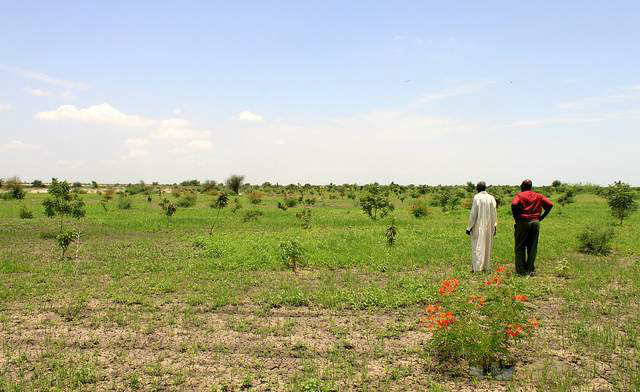
Africa started an epic effort which aim to fight climate changes and it will take many decades to complete. The main scope is to fight the expansion of the desert and at the same time to provide food, jobs and a future for the millions of people who live in the region on the outskirts of the dry land. In fact, The United Nations estimates that at the current rate of growth by 2025, two thirds of Africa’s arable land will be covered in Saharan sand. Therefore it has been planned to built a giant wall of trees in the center of Africa, just below the Sahara desert, it will stretch across the entire continent to help halt the advancing sands: it is called The Great Green Wall.


The origin of this project goes back in 1927, during the colonial time when the French colonial forester mr Louis Lavauden suggested that deserts were spreading due to deforestation. In the 50s also the English forester Richard St. Barbe Baker expressed the idea of a "green front" in order to form a wide barrier of trees to contain the spreading desert. Few decades later, in 1970, droughts in the Horn of Africa, gave wings to the idea, and finally in 2007 the African Union approved the Great Green Wall Initiative. Despite lots of criticisms, the project began in 2007 and it is estimated it will cost more than $8 billions. In order to halt and reverse land degradation, it is expected that each year it will be restored 10 million hectares.The Initiative is backed by many regional and international organizations, among the many there are:European Union (EU), Food and Agriculture Organization of the United Nations (FAO), Pan African Farmers Organization (PAFO), Sahara and Sahel Observatory (OSS), United Nations Envirnonment Programme (UNEP), Walloon Region of Belgium, Wallonie-Bruxelles International and The World Bank.


The Great Green Wall is an African Uninon program bringing together more than 20 countries from the Sahelo-Saharan region including Algeria, Burkina Faso, Benin, Chad,Cape Verde, Djibouti, Egypt, Ethiopia, Libya, Mali, Mauritania, Niger, Nigeria, Senegal, Somalia, Sudan, the Gambia and Tunisia. 


This project stretches for 8,000 km long and 15 km wide and 11 countries are involve in it. Because of its huge commitment several state leaders expressed their will of not wanting to proceed with this project, however for the time being Senagal is doing great, in fact they have planted 11 milions trees in the first few years.


The Great Green Wall initiative hopes trees will slow soil erosion, slow wind speeds, help rain water filter into the ground and to stop the desert from growing.
There are 37 suitable species of trees that are planted and they are "drought-adapted species" native to the areas they are planted, this will help them to root.

Among the objective of this project are:

  • Improve life standards to the population: fighting droughts, increase the number of natural resource that the locals can access and as consequence diminish the migration;
  • Changing the environment for the future generations;.
  • Growing more than just trees: growing the fertile land, give access to food to millions of people; giving jobs to locals; give the citizens a reason to stay in their own country; growing economic opportunities to boost businesses, developping a symbol of peace among the different countries, growing resilience to climate changes in a region where the temperatures are expected to rise faster than anywhere else on Earth.
Senegal for instance, has welcomed this initiative and in the first decades they planted eleven millions of trees which had a very positive impact in the community. In fact, Senegalese President Abdoulaye Wade affirms that the Green Wall has generated a whole new economy, and now Women look after the crops which give them work and an income to sustain their families and as consequence attendance of kids at local schools have also increased.

Since the beginning of this project there has been many criticisms about the fact that the ecosystem should be respected, the extreme high costs of planting so many trees and the futility to fight the nature forces. Others support the evidence of global warming and sustain the fact that something needs to be done.
A recent analysis by the FAO (Food and Agriculture Organisation) run in 2016, shows the challenges this project faces, such like the hight costs, the slow progresses and how the dream of a green forest is not more than a green vegetation.


However there are economic ways to proceed. In fact among the most popular technique to reforest areas at lower costs there is this one called Farmer-Managed Natural Regeneration. In here it is expected that floods and animals move seeds to places where they can sprout and root.These could rapidly re-green a landscape, reducing the need for trees planting, as long as farmers protect them from fire and cattle. This technique has proven to produce good results at low costs in areas where the ecological memory is sufficient for sprouts to come up by themselves and where farmers have the right to use the trees once they get big. 


Nowadays it seems that the Green Wall project has slightly changed from a reforestation project to a sustainable land and water management. This because of the many challenges that each country had to face. Niger for instance, started to plant trees in great pomp but had to face the watering issued which cause many trees to died. Also, when the govern chanced the efforts in the project reduced and the population started using the trees just planted for their family needs, which was a step back in the greening of the country.

Considering the massive project and all the different issues each single country has to face such as politically, lack investments or absence of resources, it is great to see that things are moving even if slowly. I am very excited about this Green Wall of Africa and wish to have the opportunity to see it first hand one day!!


Further information can be found in the below links:

https://edition.cnn.com/2016/09/22/africa/great-green-wall-sahara/index.html


http://theconversation.com/africas-got-plans-for-a-great-green-wall-why-the-idea-needs-a-rethink-78627


https://en.wikipedia.org/wiki/Great_Green_Wall


http://www.un.org/sustainabledevelopment/blog/2016/11/great-green-wall-initiative-offers-unique-opportunity-to-combat-climate-change-in-africa-un-agency/

Tuesday, 20 February 2018

INDIA & MR SHARMA FOCUS ON REFORESTATION

After the Climate Conference that took place in Paris in Dember 2015, India Governament started taking things really seriously and they put in place a series of event in order to reforest their country.

India is an up bite developing country and 6 out of 10 of the world's most polluted cities are situated in this country. The Ruling Class realized they have to do something in order to fight the high pollution rate in their doorsteps. Activists hope the reforestation will decrease pollution levels helping the country to give a better air quality to its population.
With the wellness of the citizens as priority, since 2015 planting trees has become a serious commitment and India is aiming to reforest 12% of its total land area in the years that come.

The biggest event happen just few months ago when in July 2017, 800,000 volunteers worked for a whole day claiming the world record for planting 80 different species for a total of over 40 million trees.

A real epic effort!! Well done India!!


I cannot help to mention Shubhendu Sharma who has had an amazing idea about the reforestation of India.


Shubhendu Sharma is an Indian industrial engineer who left his job in Toyota to dedicate his time to his passion for nature. This guy is now a successful entrepreneur and he discovered the formula that discloses how to create a forest in few steps, even in your back garden.


All you need is soil, seeds and water.

Soil: add some biomass to it so the water can be absorbed and stay moisturized: in this way the micro-organisms can recreate and nurture the soil. It is essential to spread on the surface some mulch, in order to maintain the moist and the heath of the terrain.

Seeds: it is advisable to use native species seeds of the area and consider the growth of the trees on four level. Make sure that the same kind of trees are not planting close to each otherwise when they grow they will fight for the same nutrients and space.

Water: water regularly. The roots help to create a network of micro-organism, nutrition and fungi, and this is a very good sign that the land is rich of nutrients. Even though it seems that at the beginning the forest does not grow on the surface, the roots are expanding and they can grow up to 1 meter in 3 months. For the first 2 years it is important to maintain the forest watered and clear form weeds, so they do not suffocate the trees.

When the forest grows the sunlight will not reach the soil any longer and because of this the weeds will stop growing. Also, the leaves that die from the trees will become their nutrients and watering will not be needed and the forest will be self-sufficient.


India is giving wonderful examples on how to help our planet to create more oxygen and now we do not have any more excuses considering the secret of how to create a forest has been disclosed.


Further information can be found in the below video:

https://www.youtube.com/watch?v=mjUsobGWhs8

https://www.youtube.com/watch?v=_xBuRpeoUGA
https://www.youtube.com/watch?v=L1ux0ZF-gWA
https://www.youtube.com/watch?v=uNTUtX6fP8c

Tuesday, 19 December 2017

CHINA FIGHTS DESERT EXPANSION

Hello All,

I just came across this interesting fact about China: THEY ARE FIGHTING THE DESERT EXPANSION!


Nowadays it is very well know that deserts are expanding and several countries are trying to regain land from it through reforestation and the creation of cultivable fields, as for instance in the UAE (see my post of the 1st December 2016)
[https://www.blogger.com/blogger.g?blogID=632819474877359267#editor/target=post;postID=3753506515330022494;onPublishedMenu=publishedposts;onClosedMenu=publishedposts;postNum=23;src=postname].
Accordingly with recent researches run by The United Nations Convention deserts are expanding on a rate of about 50 thousand square meters per year.


On this purpose, in China things are starting to change. This country in fact has an extremely high population growing rate and they are craving lands to feed its population. The Kubuqi area in particular is interested by one of the largest desert of China and in the recent years they have been implementing resources and technologies with the objective of fighting the desert expansion.

In the last decade, there has been several experiments in order to find the better combination of materials and resources to start this revolution and at least it has been found a secret made from materials found in plants that can transform the sand into soil: this special mixture can retain water, nutrients and air.
The first results were very encouraging, in fact the area affected by this experiment was able to generate different type of crops such as tomatoes, sunflowers and corns. 
Ultimately, the richness of the soils gave the local population the possibility to feed their families, an income and as consequence improve the quality of their lives.

The Chinese government is aiming to reduce the size of the desert surrounding it with trees and grass and step by step struggling it down. They are the first country in the world succeeding in this project.
Elion, a leading company from the private sector which is investing in this project, is distributing licorice seeds to the farmers and shepherds. Licorice is very much used in the Chinese medicine and one of the quality of this plant is to improve the soil, doing so in few years time the soil will be suitable for the grow of grains and vegetables.
Mr Liu Dongsheng, deputy head of the State Forestry Administration, affirmed to be able to reforest half of the desert areas of the country by 2020 while the other fifty percent will be accomplished by the 2050.


In Kubuqi, Elion is working on different fronts in order to improve the efficiency of the resources and the impact into the environment. In fact they built the largest solar farm in a desert which purpose it to reduce the evaporation and boost the grass areas, never than less these investments are creating jobs for the local people helping them to rise out of poverty. In a short period of time, it has already been noticed an improvement on the amount of rainfalls which enhanced the plantations and the expansion of the green areas which means a reduction of the desert one.


This sustainable way of creating  green areas and job opportunities has been praised by several governments bodies such as: UN World Agroforestry Center and UNCCD.
Also this business model can be used by many other countries to achieve similar results.
Most of all it seems the best way to fight deforestation and desert expansion and co-operating with local residents. A win-win situation.
Whit the technologies, knowledge and skills that we have nowadays it is amazing the results we are able to achieve. I am very glad this green revolution is happening in China right now and I believe several countries edging with the deserts will start looking into the opportunity of creating green spaces for their citizens.


Full information can be found in the following links:
http://www.sciencedirect.com/science/article/pii/S2095809916311560

https://www.shine.cn/archive/feature/In-Kubuqi-turning-vast-desert-into-a-forest/shdaily.shtml

This short video is synthetic and it gives and idea of what it is about:
https://www.youtube.com/watch?v=9C0_iApuIcU


Friday, 3 November 2017

BARCELONA WANTS TO BECOME A GIANT FOREST


Hello All,

have you ever been in Barcelona?
Well, in few years it could be a complete different city!

Accordingly to a recent article posted on the 7th of August, Barcelona is aiming to double the number of the trees in the city. 

Barcellona is the second most popular city in Spain and during the heats of summer days the temperatures in of the urban area get really high, at time even seven degrees warmer than the outskirts of the city center. The reason of this difference can reside on the fact that the areas outside the city are surrounded by parks which are determinant in ventilate, cool down and contrast the temperature raising.


This is the area that will be involved in the transformation of the Barcelona.


By 2019 the equivalent of an hundred football fields will be transformed in green areas and by the 2030 the aim is to achieve 165 hectares. The project includes green rooftops and green corridors.

The leaders of this plan affirm: "The objective of this project is to transform Barcelona into a gigantic urban forest and to stimulate biodiversity in all its streets." <https://detours.canalplus.fr/lutter-contre-chaleur-barcelone-veut-devenir-foret-geante/>. Nowadays this city has only 17% of green spaces and this project will aim to create at least one square meter of green spaces per person.

Transforming an urban city into a green city is a super exciting idea and I cannot wait to go Barcelona again and enjoy this transformation.


The full article can be found in the following link:
https://detours.canalplus.fr/lutter-contre-chaleur-barcelone-veut-devenir-foret-geante/

Sunday, 23 July 2017

JADAV PAYENG WHO BUILT A FOREST FROM SCRATCH


This is the amazing story about Jadav Payeng, an India man that turned over a thousand acre of wasted land into forest, planting trees by himself.
Now this reforested area called Mulai Kathonibari is house of tigers, lions, elephants, birds and insects and it also benefit the local communities living in the area surrounding it.
Mr Payeng spent his whole life planting tree all over India and we have just to be thankful for his commitment.

I hope this moving and inspiring story will be the example that each one of us will following in order to improve our planet.


Here you will find a moving documentary about Jadav Payeng:
https://www.youtube.com/watch?v=HkZDSqyE1do

Have a look at the story of mr Jadav Payeng story in the following link: 
https://www.youtube.com/watch?v=5VhHVonQIjw

A short version of mr Jadav Payeng story can be found in this link:
https://www.youtube.com/watch?v=gawv0xB7ppU

Wednesday, 8 March 2017

THE MAGIC OF THE AMAZON BY ANTONIO DONATO NOBRE


Hello folks,

I am super excited about this article. A friend in my Tree Wander team suggested me to have a look at the following speech from TED. It talks about the Amazon, my favourite place on Earth.

In this talk, professor Nobre compares the Amazon to the heart of the world and the water that goes through it as the blood that run in the human bodies. 
He also mentions the biodiversity that populate the forest... very fascinating!!!


I loved this talk and I hope you will find it very interesting too!!

LET'S SAVE OUR PLANET!!

http://www.ted.com/talks/antonio_donato_nobre_the_magic_of_the_amazon_a_river_that_flows_invisibly_all_around_us

Monday, 13 February 2017

WANGARI MAATHAI & THE GREEN BELT MOVEMENT (GBM)

WANGARI MUTA MAATHAI

Wangari Muta Maathai (01.04.1940 – 25.09.2011) was Kenyan internationally known for being an environmental political activist and Nobel prize. She studied in the University of Pittsburgh in USA and at the University of Nairobi in Kenya.

In 1977, Maathai founded an environmental non-governmental organization which concentrated on tress planting,environmental conservation and on the rights of the women: it is called the Green Belt Movement.
In 2004 she was awarded with the Nobel Peace Prize for "her contribution to sustainable development, democracy and peace", becoming the first African woman to receive such a rewardThis recognition lead Maathai to be elected as a member of the Parliament as assistant minister for Environment and Natural Resouces untill November 2005.
In 2011 Maathai died.


THE GREEN BELT MOVEMENT

The Green Belt Movement (GBM) was founded by Professor Wangari Maathai in 1977 in order to recover a situation of decadency that was affecting the women of the rural areas of the Kenya. Women were encouraged to work together and their were taught how to grow seeds, plant trees on soil, store rainwater and provide food and firewood and get money from it, in order to overcome the lack of food supply and poverty.


This institution educated the population about protecting the environment, the issues of the deforestation and climate change.

Currently, communities come together to plant trees and as consequence the reforestation is taking place.


The GBM operates in four areas such as: Trees Planting and Water Harvesting,Climate Change, Mainstream Advocacy, Gender Livelihood and Advocacy. 


Trees Planting and Water Harvesting: the aim of this operation is to preserve the biodiversity of the natural environment and re-balance the ecosystem.
Climate Change: the objective is to educate the local communities about the important role that the conservation of the natural environment plays to contrast the climate change.

Mainstream Advocacy: it is meant to contrast the corruption in Kenya but mainly the deforestation which is taking place without any control.
Gender Livelihood and Advocacy: the reforestation of some area already empowered 
local communities to grown their own food and shed their families.

Nowadays, the Wangari Maathai and the Green Belt Movement legacy continue and anyone interested can get involved through work opportunities, internships or volunteering.
Jobs in these areas are aimed to support the local communities and guests are invited to take part in Safaris and experience culture and heritage of the residents.

I believe this is a great opportunity 
to explore a new culture and lifestyle first hand, especially for students or anyone interested to have a gap from their routine.
Please let me know your thoughts and your experiences if you decide to move over there.

For further and complete information please visit the below websites:
http://www.greenbeltmovement.org/wangari-maathai/biography
https://en.wikipedia.org/wiki/Wangari_Maathai