Monday, 23 April 2018

G ADVENTURES - PLANETERRA


Today I would like to talk about travellers and travelling.

Most of the time, travelling is associate to a possible threat to natural environments and local communities of a country rather than something beneficial.


G Adventures seems to make the difference.
This travel company for over 25 years not only helped travellers to integrate travelling into the different cultures but it also sustained local communities while doing that. After the firsts successes in 2003, Mr Bruce Poon Tip founder of G Adventures, established a non-profit organization called "Planeterra Foundation". The aim of this company is to invest the donations they collect from travellers into development projects, in the last 15 years they have been able to support different businesses from healthcare to conservation. 
This is how they define themselves: “Planeterra helps to start something. Once a social enterprise is up and running the impacts begin to multiply within the community. We believe that tourism can be the greatest method of wealth distribution in the world, and we’re out to prove it.”  <https://planeterra.org/about-us/>


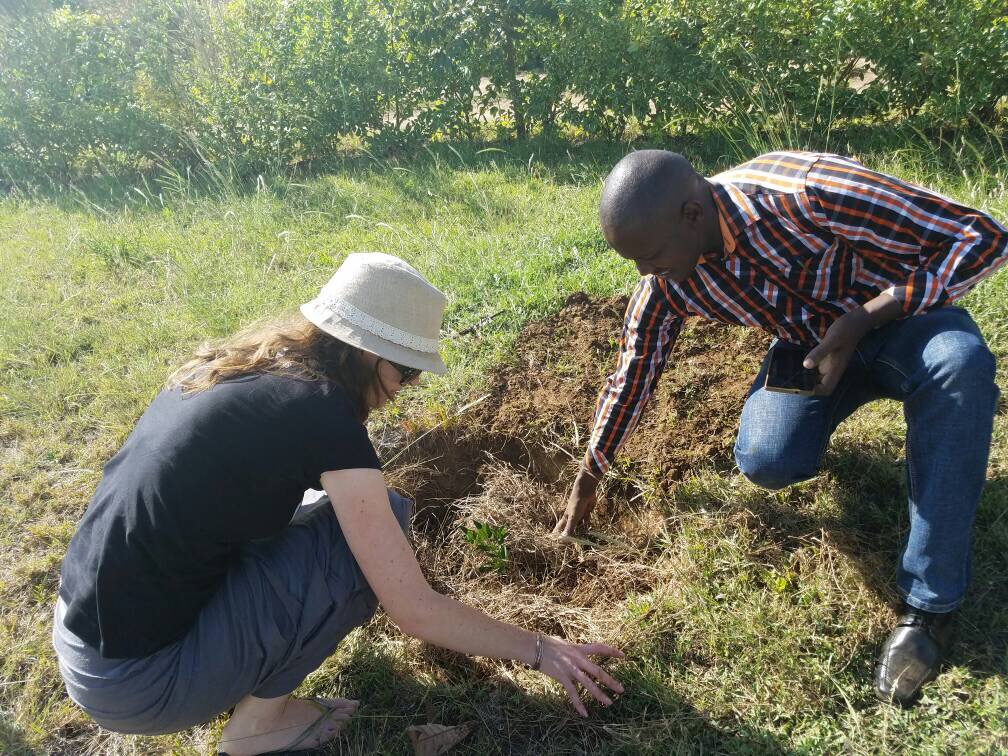
In Nairobi in Kenya, for instance, G Adventures Safari Central cooperated with Café’ Ubuntu. Together they planted trees during the Earth Weeks and now this café’ supports Special needs' schools and local women whose children are living with disabilities.


Among the various projects Planeterra is developing there is also one in Guneysinir, in Turkey. This area is particularly dry and between July and September, and the average rainfall is less than 10mm. Accordingly with recent researches on the territory, it resulted that the population is growing and the limited agriculture resources of the natural environment are unable to feed the population.

Considering characteristics of this land, it has been found out that almond orchards are the best trees to plants in order to optimize the water retention. When travelling with G Adventures in Guneysinir, there will be the chance to plant some trees in the orchard. Tourists will have the opportunity to visit the park, interact with the local residents and learn further about the project. This almond plantation provides sheds for people, improves water  retention in the soil and the selling of almonds is a source of income.

 “This project was inspired by conversations with G Advenutres' field staff and the residents participating in the home stay experience. The goal is to provide an opportunity for travellers to spend time in a community park and contribute to a budding social enterprise. With the help of the local municipality, we identified a 10,000 sq.m. plot of land that is perfectly suited for this type of multi-year development project.” <https://planeterra.org/what-we-do/our-projects/turkey-almond-cooperative/>

 
I got to know G Adventures during my University time when I attended a convention held by mr Poon Tip here in London. I found very inspiring this new way of looking at tourism as a resource rather than as something harmful.
I firmly believe there should be more initiatives like this, the world is one and it is an unique place: we need to take good care of it.

Friday, 6 April 2018

MY PASSION FOR TREES BBC DOCUMENTARY 2017

Hello All,

I am posting a link to video shown on BBC at the end of December 2017, where the famous actress Judi Dench share her passion for trees.

I have to say, they are sharing information about trees I have never heard before and i found them inspiring!! :)

Please have a look and let me know what you think about it:
https://www.youtube.com/watch?v=mAqR4XYKeX0

I hope you will enjoy!
Jenny

Monday, 5 March 2018

THE GREEN WALL OF AFRICA


Since I discovered this project, I cannot wait to be involved in it!!!  Many of the researches I have run about the reforestation in our planet, trees planting, quality of life of local residents and global warming are all linked in here.
Hope you will enjoy the reading!


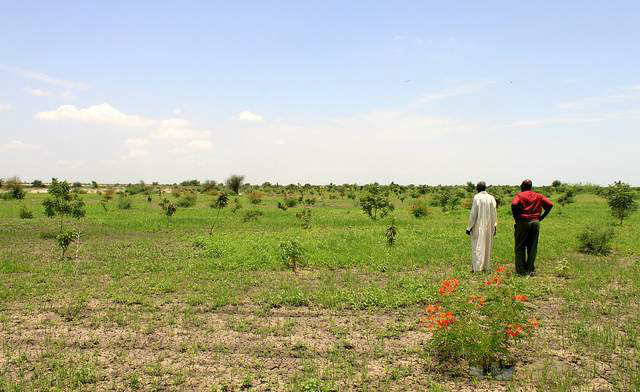
Africa started an epic effort which aim to fight climate changes and it will take many decades to complete. The main scope is to fight the expansion of the desert and at the same time to provide food, jobs and a future for the millions of people who live in the region on the outskirts of the dry land. In fact, The United Nations estimates that at the current rate of growth by 2025, two thirds of Africa’s arable land will be covered in Saharan sand. Therefore it has been planned to built a giant wall of trees in the center of Africa, just below the Sahara desert, it will stretch across the entire continent to help halt the advancing sands: it is called The Great Green Wall.


The origin of this project goes back in 1927, during the colonial time when the French colonial forester mr Louis Lavauden suggested that deserts were spreading due to deforestation. In the 50s also the English forester Richard St. Barbe Baker expressed the idea of a "green front" in order to form a wide barrier of trees to contain the spreading desert. Few decades later, in 1970, droughts in the Horn of Africa, gave wings to the idea, and finally in 2007 the African Union approved the Great Green Wall Initiative. Despite lots of criticisms, the project began in 2007 and it is estimated it will cost more than $8 billions. In order to halt and reverse land degradation, it is expected that each year it will be restored 10 million hectares.The Initiative is backed by many regional and international organizations, among the many there are:European Union (EU), Food and Agriculture Organization of the United Nations (FAO), Pan African Farmers Organization (PAFO), Sahara and Sahel Observatory (OSS), United Nations Envirnonment Programme (UNEP), Walloon Region of Belgium, Wallonie-Bruxelles International and The World Bank.


The Great Green Wall is an African Uninon program bringing together more than 20 countries from the Sahelo-Saharan region including Algeria, Burkina Faso, Benin, Chad,Cape Verde, Djibouti, Egypt, Ethiopia, Libya, Mali, Mauritania, Niger, Nigeria, Senegal, Somalia, Sudan, the Gambia and Tunisia. 


This project stretches for 8,000 km long and 15 km wide and 11 countries are involve in it. Because of its huge commitment several state leaders expressed their will of not wanting to proceed with this project, however for the time being Senagal is doing great, in fact they have planted 11 milions trees in the first few years.


The Great Green Wall initiative hopes trees will slow soil erosion, slow wind speeds, help rain water filter into the ground and to stop the desert from growing.
There are 37 suitable species of trees that are planted and they are "drought-adapted species" native to the areas they are planted, this will help them to root.

Among the objective of this project are:

  • Improve life standards to the population: fighting droughts, increase the number of natural resource that the locals can access and as consequence diminish the migration;
  • Changing the environment for the future generations;.
  • Growing more than just trees: growing the fertile land, give access to food to millions of people; giving jobs to locals; give the citizens a reason to stay in their own country; growing economic opportunities to boost businesses, developping a symbol of peace among the different countries, growing resilience to climate changes in a region where the temperatures are expected to rise faster than anywhere else on Earth.
Senegal for instance, has welcomed this initiative and in the first decades they planted eleven millions of trees which had a very positive impact in the community. In fact, Senegalese President Abdoulaye Wade affirms that the Green Wall has generated a whole new economy, and now Women look after the crops which give them work and an income to sustain their families and as consequence attendance of kids at local schools have also increased.

Since the beginning of this project there has been many criticisms about the fact that the ecosystem should be respected, the extreme high costs of planting so many trees and the futility to fight the nature forces. Others support the evidence of global warming and sustain the fact that something needs to be done.
A recent analysis by the FAO (Food and Agriculture Organisation) run in 2016, shows the challenges this project faces, such like the hight costs, the slow progresses and how the dream of a green forest is not more than a green vegetation.


However there are economic ways to proceed. In fact among the most popular technique to reforest areas at lower costs there is this one called Farmer-Managed Natural Regeneration. In here it is expected that floods and animals move seeds to places where they can sprout and root.These could rapidly re-green a landscape, reducing the need for trees planting, as long as farmers protect them from fire and cattle. This technique has proven to produce good results at low costs in areas where the ecological memory is sufficient for sprouts to come up by themselves and where farmers have the right to use the trees once they get big. 


Nowadays it seems that the Green Wall project has slightly changed from a reforestation project to a sustainable land and water management. This because of the many challenges that each country had to face. Niger for instance, started to plant trees in great pomp but had to face the watering issued which cause many trees to died. Also, when the govern chanced the efforts in the project reduced and the population started using the trees just planted for their family needs, which was a step back in the greening of the country.

Considering the massive project and all the different issues each single country has to face such as politically, lack investments or absence of resources, it is great to see that things are moving even if slowly. I am very excited about this Green Wall of Africa and wish to have the opportunity to see it first hand one day!!


Further information can be found in the below links:

https://edition.cnn.com/2016/09/22/africa/great-green-wall-sahara/index.html


http://theconversation.com/africas-got-plans-for-a-great-green-wall-why-the-idea-needs-a-rethink-78627


https://en.wikipedia.org/wiki/Great_Green_Wall


http://www.un.org/sustainabledevelopment/blog/2016/11/great-green-wall-initiative-offers-unique-opportunity-to-combat-climate-change-in-africa-un-agency/

Tuesday, 20 February 2018

INDIA & MR SHARMA FOCUS ON REFORESTATION

After the Climate Conference that took place in Paris in Dember 2015, India Governament started taking things really seriously and they put in place a series of event in order to reforest their country.

India is an up bite developing country and 6 out of 10 of the world's most polluted cities are situated in this country. The Ruling Class realized they have to do something in order to fight the high pollution rate in their doorsteps. Activists hope the reforestation will decrease pollution levels helping the country to give a better air quality to its population.
With the wellness of the citizens as priority, since 2015 planting trees has become a serious commitment and India is aiming to reforest 12% of its total land area in the years that come.

The biggest event happen just few months ago when in July 2017, 800,000 volunteers worked for a whole day claiming the world record for planting 80 different species for a total of over 40 million trees.

A real epic effort!! Well done India!!


I cannot help to mention Shubhendu Sharma who has had an amazing idea about the reforestation of India.


Shubhendu Sharma is an Indian industrial engineer who left his job in Toyota to dedicate his time to his passion for nature. This guy is now a successful entrepreneur and he discovered the formula that discloses how to create a forest in few steps, even in your back garden.


All you need is soil, seeds and water.

Soil: add some biomass to it so the water can be absorbed and stay moisturized: in this way the micro-organisms can recreate and nurture the soil. It is essential to spread on the surface some mulch, in order to maintain the moist and the heath of the terrain.

Seeds: it is advisable to use native species seeds of the area and consider the growth of the trees on four level. Make sure that the same kind of trees are not planting close to each otherwise when they grow they will fight for the same nutrients and space.

Water: water regularly. The roots help to create a network of micro-organism, nutrition and fungi, and this is a very good sign that the land is rich of nutrients. Even though it seems that at the beginning the forest does not grow on the surface, the roots are expanding and they can grow up to 1 meter in 3 months. For the first 2 years it is important to maintain the forest watered and clear form weeds, so they do not suffocate the trees.

When the forest grows the sunlight will not reach the soil any longer and because of this the weeds will stop growing. Also, the leaves that die from the trees will become their nutrients and watering will not be needed and the forest will be self-sufficient.


India is giving wonderful examples on how to help our planet to create more oxygen and now we do not have any more excuses considering the secret of how to create a forest has been disclosed.


Further information can be found in the below video:

https://www.youtube.com/watch?v=mjUsobGWhs8

https://www.youtube.com/watch?v=_xBuRpeoUGA
https://www.youtube.com/watch?v=L1ux0ZF-gWA
https://www.youtube.com/watch?v=uNTUtX6fP8c

Tuesday, 16 January 2018

...AND LONDON LOSES A PIECE OF HISTORY...

Hello all,
following the recent news about Chestnut Avenue in Tooting Common I have found a picture of the area dated 1818: I just loved it!


There has been lots of rumors recently in South London about Chestnut Avenue trees cutting.
Wandsworth council decided to eradicate secular trees in Tooting Common area because some of them were sick and fungus damaged their trunks. For instance, last winter, due to the strong winds, one tree has fallen and due to this episode the council started to consider the health and safety of the residents. When experts have been called for an opinion they suggested to replace the whole avenue in order to prevent any further accidents.


Local residents strongly opposed to the council decision and started a petition in order to stop this massacre from happening; they even wrote to the major of London, mr Sadiq Khan to have this decision overturned but in vain.


There are also economic controversity behind this issue.
From one side, such huge trees need high maintanance like pruning and pollarding and these treatments are expensive. On the other side, it is still costy to remove them and plant new trees. In any case, these funds come from the taxes of the residents and some citizens felt it was unfair not being involved in the problem.

It is interesting to mention that a software called 'I-tree' calculated the yearly values of street trees in term of ecosystem services. Among the benefits there are flood alleviation, cooling, pollutant removal and carbon dioxite reduction for an equivalent of £133m of benefits each year provided only by London’s trees. This software highlight also the not monetary benefits that green spaces bring to residents such as improved mental health of locals and ecological diversity.  

The 12th of September 2017 the trees cutting along Chestnut Avenue started. It has been removed a total of 51 old horse chestnuts, assessed by experts as "in decline and approaching the end of their natural file span". They have been replaced with 64 semi-mature small leafed lime trees. The experts affirmed: "These trees are already nearly 20 feet tall and will ensure a healthy and flourishing tree-lined avenue".<https://amp.theguardian.com/commentisfree/2017/sep/11/price-urban-trees-chainsaw-chestnuts-london-elm-sheffield>

I am a trees lover and I usually support the conservation but this time I have looked at the problem objectively and I have to say that if it is proved a tree is not in good health any longer and could create harm to the people around it, the right decision is to remove it and replace with a new plant. This is the circle of life, and the old generations need to allow the new ones to grown.


Please find the full articles in the following links:

https://amp.theguardian.com/commentisfree/2017/sep/11/price-urban-trees-chainsaw-chestnuts-london-elm-sheffield

http://becandbalhamlabour.org/category/tooting-bec-and-balham/

http://www.wandsworthguardian.co.uk/news/15515649.Council_s_plans_to_axe_150_year_old_trees_over_next_six_months_sparks_massive_backlash/

http://www.wandsworth.gov.uk/news/article/14166/new_avenue_of_trees_being_planted_on_tooting_common