Tuesday, 1 May 2018

From the Evening Standard of Sunday 29th April 2018


Hello All,

please read the below article from Sunday edition of the Evening Standard a friend of mine submitted to my attention.

It is outrageous that information like these are kept undercover, a very shame!!

Please let me know your thoughts.


"Millions of trees at risk in secretive Network Rail felling programme way and work with environmental organisations to help us get it right when we do have to take action. Millions of trees are at risk in a secretive nationwide felling operation launched by Network Rail to end the nuisance of leaves and branches falling on the line. Thousands of poplars, sycamores, limes, ash trees and horse chestnuts have already been chopped down across the country from Yorkshire to Dorset, and the scale of the potential destruction outlined in a Network Rail blueprint involves 10m trees growing within 60 metres of track. The company has used drones to create an aerial map of its 40,000 hectares of railway and identified “hotspots” where mature trees might cause a problem at an unspecified time in the future. Engineers are operating in a targeted felling programme that dwarfs the operation by Sheffield city council that was halted in the face of huge public protest and condemnation from the environment secretary, Michael Gove. Over the last fortnight, people around the country have woken to the sound of chainsaws and expressed concern at the lack of consultation and the scale of the destruction. In one incident, police in Bournemouth were called by residents to complain that engineers were operating illegally as the felling is taking place during the nesting season. At one west London station this week, an engineer felling five mature trees said they were carrying out a “pre-emptive strike” in case branches or leaves fell on the line in future. Ray Walton witnessed hundreds of trees being chopped down along the length of track between Christchurch and Bournemouth. “It was total mass destruction, they obliterated every tree,” he said. “These trees were mature 30-foot-high trees which have been there for 50 years in some cases and never caused a problem. “This went far beyond reasonable management of the trees. They took them all out, and destroyed the habitat for wildlife.” Network Rail boasts of the green corridor along its tracks as a haven for wildlife, but in London, Dorset, the Midlands and Yorkshire thousands of trees and the vegetation beneath them are being cleared, leaving habitats devastated. James Graham, from Manchester, said he saw thousands of trees being felled last week along a 10-mile section of the trans-Pennine route from Manchester to Leeds. “I know they have to manage the trees, but this was excessive,” he said. “It looked like some kind of logging operation. I was sitting in the train and looking out at the countryside and all you could see was mile after mile of tree stumps and sawdust. They had felled trees which were a long way from the track. It was extreme.” In Sutton Coldfield, teams working for Network Rail have been felling hundreds of trackside trees. Elsewhere in the country, tree surgeons working for the rail firm are engaged in mass felling. Network Rail admits the vast majority of the trees are healthy. It defended the felling, saying its new tree database of hotspot problem trees has “revolutionised” its approach to “vegetation management” to cut delays and risks to passengers from tree branches. The company said the average tree had between 10 and 50,000 leaves, any or all of which could fall on the line. The timing has caused increased outrage because it is taking place during nesting season – between March and August – despite promises by Network Rail that no felling would take place when birds are nesting.Caroline Lucas, the co-leader of the Green party, said the scale of the operation was shocking and an act of environmental vandalism. “While some tree work is required on safety grounds,” she said, “Network Rail’s approach tends to be one of slash and burn. To be taking action in the nesting season is even more reckless.” An RSPB spokesperson said: “The worry is that much of this work is ... non-urgent work that is simply being carried out with little regard to the presence of birds and other animals. “If such ... work is being done without reference to the Wildlife and Countryside Act, which offers basic protection to nesting birds, it may well be in breach of the law.” Network Rail refused to provide the Guardian with its database of trees or reveal how many of the 10m trees identified alongside the tracks have been earmarked for felling. Paul de Zylva, nature campaigner for Friends of the Earth, criticised the insensitive clearance of habitats. “Rail corridors are sanctuaries for wildlife and trees can be important screening for communities,” he said. “Network Rail should be improving how it manages its land for wildlife as trees and plants are likely to be habitats for a variety of British wildlife, including nesting birds.” Network Rail said: “Network Rail is a big, responsible, public company that takes its environmental obligations seriously. We manage our lineside to provide healthy biodiversity advised by experts in the field. We do remove tress that are, or could be dangerous, or impact on the reliability of services that serve over 4.5m people everyday. “We make our policies in this area public, in an open and transparent. On its website, it said the tree felling was part of its Orbis (Offering Rail Better Information Service) programme and was saving the taxpayer thousands of pounds in repair and clean-up costs and reducing the likelihood of a train colliding with a fallen tree or branch."

The full please visit: 
https://www.theguardian.com/business/2018/apr/29/millions-of-trees-at-risk-in-secretive-network-rail-felling-programme?CMP=

Monday, 23 April 2018

G ADVENTURES - PLANETERRA


Today I would like to talk about travellers and travelling.

Most of the time, travelling is associate to a possible threat to natural environments and local communities of a country rather than something beneficial.


G Adventures seems to make the difference.
This travel company for over 25 years not only helped travellers to integrate travelling into the different cultures but it also sustained local communities while doing that. After the firsts successes in 2003, Mr Bruce Poon Tip founder of G Adventures, established a non-profit organization called "Planeterra Foundation". The aim of this company is to invest the donations they collect from travellers into development projects, in the last 15 years they have been able to support different businesses from healthcare to conservation. 
This is how they define themselves: “Planeterra helps to start something. Once a social enterprise is up and running the impacts begin to multiply within the community. We believe that tourism can be the greatest method of wealth distribution in the world, and we’re out to prove it.”  <https://planeterra.org/about-us/>


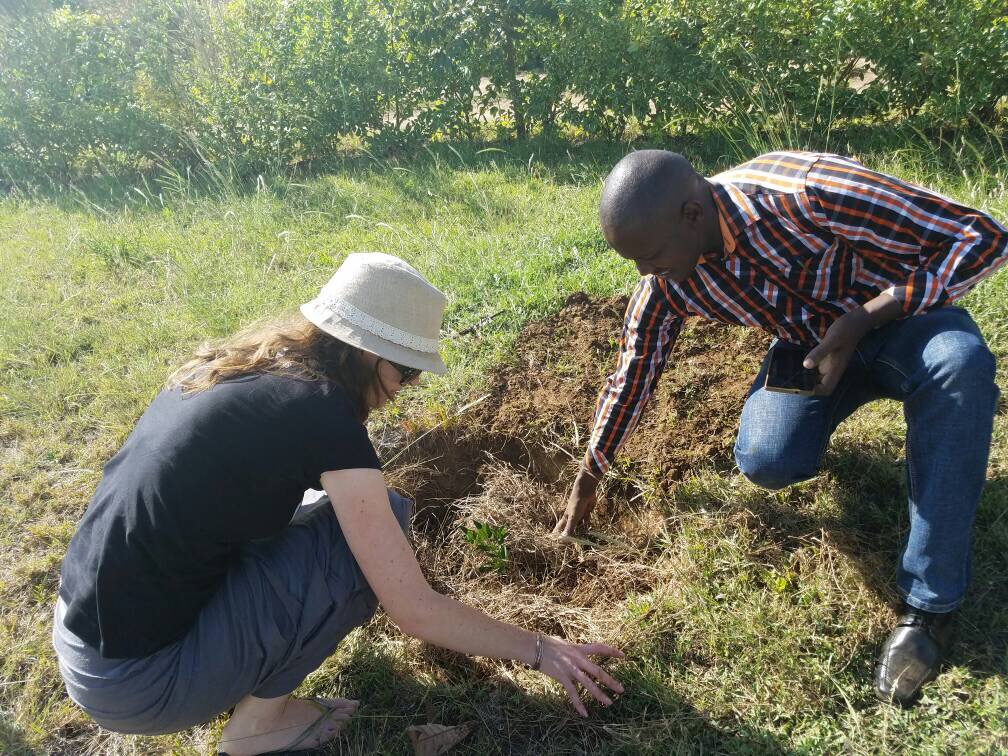
In Nairobi in Kenya, for instance, G Adventures Safari Central cooperated with Café’ Ubuntu. Together they planted trees during the Earth Weeks and now this café’ supports Special needs' schools and local women whose children are living with disabilities.


Among the various projects Planeterra is developing there is also one in Guneysinir, in Turkey. This area is particularly dry and between July and September, and the average rainfall is less than 10mm. Accordingly with recent researches on the territory, it resulted that the population is growing and the limited agriculture resources of the natural environment are unable to feed the population.

Considering characteristics of this land, it has been found out that almond orchards are the best trees to plants in order to optimize the water retention. When travelling with G Adventures in Guneysinir, there will be the chance to plant some trees in the orchard. Tourists will have the opportunity to visit the park, interact with the local residents and learn further about the project. This almond plantation provides sheds for people, improves water  retention in the soil and the selling of almonds is a source of income.

 “This project was inspired by conversations with G Advenutres' field staff and the residents participating in the home stay experience. The goal is to provide an opportunity for travellers to spend time in a community park and contribute to a budding social enterprise. With the help of the local municipality, we identified a 10,000 sq.m. plot of land that is perfectly suited for this type of multi-year development project.” <https://planeterra.org/what-we-do/our-projects/turkey-almond-cooperative/>

 
I got to know G Adventures during my University time when I attended a convention held by mr Poon Tip here in London. I found very inspiring this new way of looking at tourism as a resource rather than as something harmful.
I firmly believe there should be more initiatives like this, the world is one and it is an unique place: we need to take good care of it.

Friday, 6 April 2018

MY PASSION FOR TREES BBC DOCUMENTARY 2017

Hello All,

I am posting a link to video shown on BBC at the end of December 2017, where the famous actress Judi Dench share her passion for trees.

I have to say, they are sharing information about trees I have never heard before and i found them inspiring!! :)

Please have a look and let me know what you think about it:
https://www.youtube.com/watch?v=mAqR4XYKeX0

I hope you will enjoy!
Jenny

Monday, 5 March 2018

THE GREEN WALL OF AFRICA


Since I discovered this project, I cannot wait to be involved in it!!!  Many of the researches I have run about the reforestation in our planet, trees planting, quality of life of local residents and global warming are all linked in here.
Hope you will enjoy the reading!


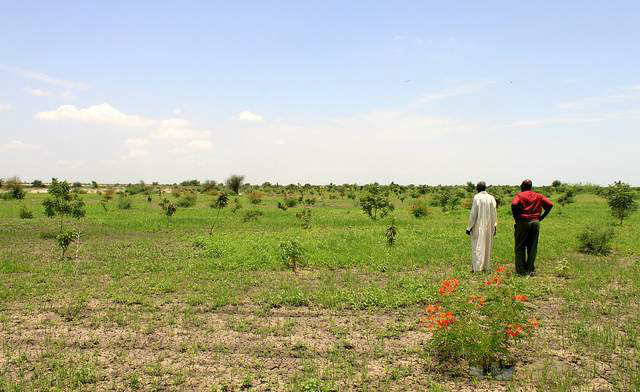
Africa started an epic effort which aim to fight climate changes and it will take many decades to complete. The main scope is to fight the expansion of the desert and at the same time to provide food, jobs and a future for the millions of people who live in the region on the outskirts of the dry land. In fact, The United Nations estimates that at the current rate of growth by 2025, two thirds of Africa’s arable land will be covered in Saharan sand. Therefore it has been planned to built a giant wall of trees in the center of Africa, just below the Sahara desert, it will stretch across the entire continent to help halt the advancing sands: it is called The Great Green Wall.


The origin of this project goes back in 1927, during the colonial time when the French colonial forester mr Louis Lavauden suggested that deserts were spreading due to deforestation. In the 50s also the English forester Richard St. Barbe Baker expressed the idea of a "green front" in order to form a wide barrier of trees to contain the spreading desert. Few decades later, in 1970, droughts in the Horn of Africa, gave wings to the idea, and finally in 2007 the African Union approved the Great Green Wall Initiative. Despite lots of criticisms, the project began in 2007 and it is estimated it will cost more than $8 billions. In order to halt and reverse land degradation, it is expected that each year it will be restored 10 million hectares.The Initiative is backed by many regional and international organizations, among the many there are:European Union (EU), Food and Agriculture Organization of the United Nations (FAO), Pan African Farmers Organization (PAFO), Sahara and Sahel Observatory (OSS), United Nations Envirnonment Programme (UNEP), Walloon Region of Belgium, Wallonie-Bruxelles International and The World Bank.


The Great Green Wall is an African Uninon program bringing together more than 20 countries from the Sahelo-Saharan region including Algeria, Burkina Faso, Benin, Chad,Cape Verde, Djibouti, Egypt, Ethiopia, Libya, Mali, Mauritania, Niger, Nigeria, Senegal, Somalia, Sudan, the Gambia and Tunisia. 


This project stretches for 8,000 km long and 15 km wide and 11 countries are involve in it. Because of its huge commitment several state leaders expressed their will of not wanting to proceed with this project, however for the time being Senagal is doing great, in fact they have planted 11 milions trees in the first few years.


The Great Green Wall initiative hopes trees will slow soil erosion, slow wind speeds, help rain water filter into the ground and to stop the desert from growing.
There are 37 suitable species of trees that are planted and they are "drought-adapted species" native to the areas they are planted, this will help them to root.

Among the objective of this project are:

  • Improve life standards to the population: fighting droughts, increase the number of natural resource that the locals can access and as consequence diminish the migration;
  • Changing the environment for the future generations;.
  • Growing more than just trees: growing the fertile land, give access to food to millions of people; giving jobs to locals; give the citizens a reason to stay in their own country; growing economic opportunities to boost businesses, developping a symbol of peace among the different countries, growing resilience to climate changes in a region where the temperatures are expected to rise faster than anywhere else on Earth.
Senegal for instance, has welcomed this initiative and in the first decades they planted eleven millions of trees which had a very positive impact in the community. In fact, Senegalese President Abdoulaye Wade affirms that the Green Wall has generated a whole new economy, and now Women look after the crops which give them work and an income to sustain their families and as consequence attendance of kids at local schools have also increased.

Since the beginning of this project there has been many criticisms about the fact that the ecosystem should be respected, the extreme high costs of planting so many trees and the futility to fight the nature forces. Others support the evidence of global warming and sustain the fact that something needs to be done.
A recent analysis by the FAO (Food and Agriculture Organisation) run in 2016, shows the challenges this project faces, such like the hight costs, the slow progresses and how the dream of a green forest is not more than a green vegetation.


However there are economic ways to proceed. In fact among the most popular technique to reforest areas at lower costs there is this one called Farmer-Managed Natural Regeneration. In here it is expected that floods and animals move seeds to places where they can sprout and root.These could rapidly re-green a landscape, reducing the need for trees planting, as long as farmers protect them from fire and cattle. This technique has proven to produce good results at low costs in areas where the ecological memory is sufficient for sprouts to come up by themselves and where farmers have the right to use the trees once they get big. 


Nowadays it seems that the Green Wall project has slightly changed from a reforestation project to a sustainable land and water management. This because of the many challenges that each country had to face. Niger for instance, started to plant trees in great pomp but had to face the watering issued which cause many trees to died. Also, when the govern chanced the efforts in the project reduced and the population started using the trees just planted for their family needs, which was a step back in the greening of the country.

Considering the massive project and all the different issues each single country has to face such as politically, lack investments or absence of resources, it is great to see that things are moving even if slowly. I am very excited about this Green Wall of Africa and wish to have the opportunity to see it first hand one day!!


Further information can be found in the below links:

https://edition.cnn.com/2016/09/22/africa/great-green-wall-sahara/index.html


http://theconversation.com/africas-got-plans-for-a-great-green-wall-why-the-idea-needs-a-rethink-78627


https://en.wikipedia.org/wiki/Great_Green_Wall


http://www.un.org/sustainabledevelopment/blog/2016/11/great-green-wall-initiative-offers-unique-opportunity-to-combat-climate-change-in-africa-un-agency/

Tuesday, 20 February 2018

INDIA & MR SHARMA FOCUS ON REFORESTATION

After the Climate Conference that took place in Paris in Dember 2015, India Governament started taking things really seriously and they put in place a series of event in order to reforest their country.

India is an up bite developing country and 6 out of 10 of the world's most polluted cities are situated in this country. The Ruling Class realized they have to do something in order to fight the high pollution rate in their doorsteps. Activists hope the reforestation will decrease pollution levels helping the country to give a better air quality to its population.
With the wellness of the citizens as priority, since 2015 planting trees has become a serious commitment and India is aiming to reforest 12% of its total land area in the years that come.

The biggest event happen just few months ago when in July 2017, 800,000 volunteers worked for a whole day claiming the world record for planting 80 different species for a total of over 40 million trees.

A real epic effort!! Well done India!!


I cannot help to mention Shubhendu Sharma who has had an amazing idea about the reforestation of India.


Shubhendu Sharma is an Indian industrial engineer who left his job in Toyota to dedicate his time to his passion for nature. This guy is now a successful entrepreneur and he discovered the formula that discloses how to create a forest in few steps, even in your back garden.


All you need is soil, seeds and water.

Soil: add some biomass to it so the water can be absorbed and stay moisturized: in this way the micro-organisms can recreate and nurture the soil. It is essential to spread on the surface some mulch, in order to maintain the moist and the heath of the terrain.

Seeds: it is advisable to use native species seeds of the area and consider the growth of the trees on four level. Make sure that the same kind of trees are not planting close to each otherwise when they grow they will fight for the same nutrients and space.

Water: water regularly. The roots help to create a network of micro-organism, nutrition and fungi, and this is a very good sign that the land is rich of nutrients. Even though it seems that at the beginning the forest does not grow on the surface, the roots are expanding and they can grow up to 1 meter in 3 months. For the first 2 years it is important to maintain the forest watered and clear form weeds, so they do not suffocate the trees.

When the forest grows the sunlight will not reach the soil any longer and because of this the weeds will stop growing. Also, the leaves that die from the trees will become their nutrients and watering will not be needed and the forest will be self-sufficient.


India is giving wonderful examples on how to help our planet to create more oxygen and now we do not have any more excuses considering the secret of how to create a forest has been disclosed.


Further information can be found in the below video:

https://www.youtube.com/watch?v=mjUsobGWhs8

https://www.youtube.com/watch?v=_xBuRpeoUGA
https://www.youtube.com/watch?v=L1ux0ZF-gWA
https://www.youtube.com/watch?v=uNTUtX6fP8c